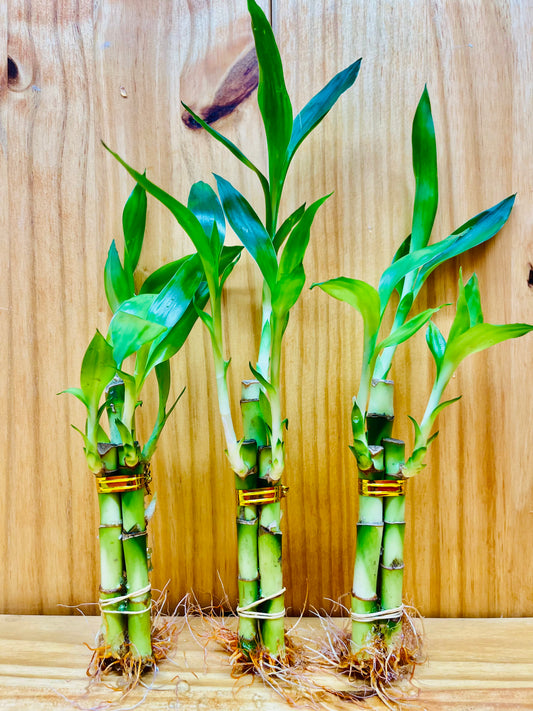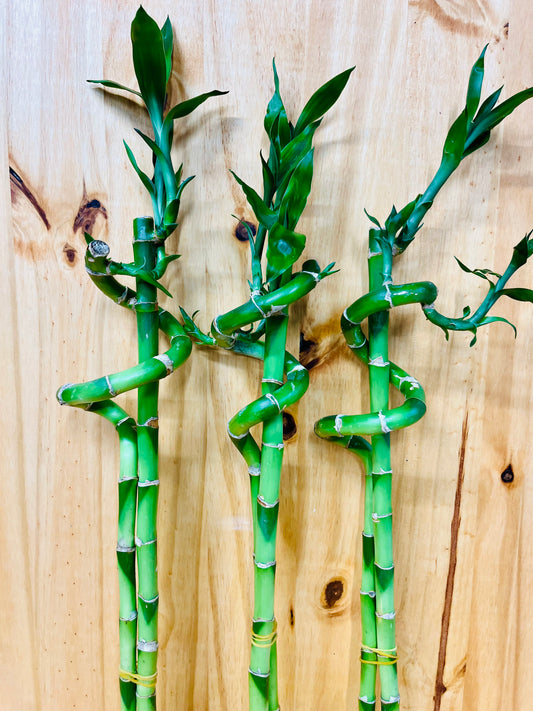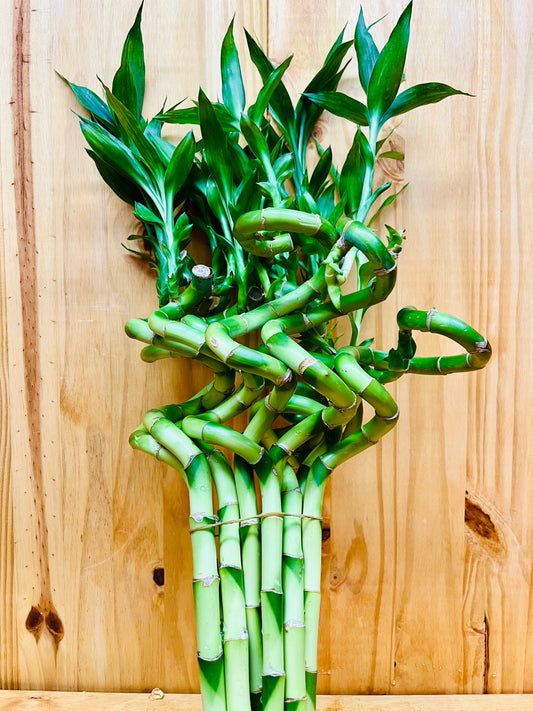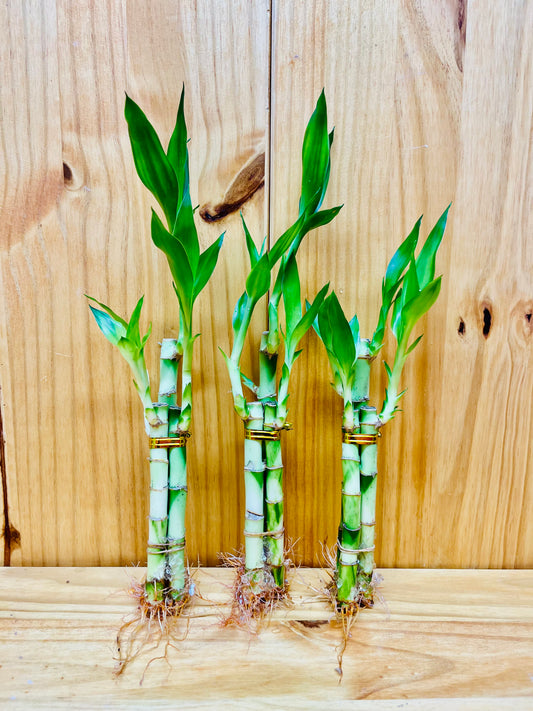

Lucky bamboo brings fresh greenery to desks, shelves, and small spaces without demanding a complicated care routine. Despite its name, lucky bamboo (Dracaena sanderiana) is not a true bamboo. It is a tropical plant that can grow in water or potting mix with the right care.
The essentials are simple: bright, indirect light, clean water, comfortable temperatures, and a light hand with fertilizer.
Quick lucky bamboo care instructions
- Light: Bright, indirect sunlight. Avoid harsh, direct sun.
- Water-grown plants: Keep the roots covered with clean water, without submerging most of the stalk.
- Soil-grown plants: Keep the potting mix lightly moist, never soggy.
- Temperature: Aim for 65–85°F and avoid cold drafts.
- Fertilizer: Feed sparingly. More is not better.
- Pet safety: Keep out of reach of cats and dogs. Lucky bamboo is toxic if chewed or eaten.
1. Choose bright, indirect light
Place your lucky bamboo near a window where it receives gentle, filtered light. An east-facing window or a spot set back from a brighter window can work well. Strong afternoon sun can scorch the leaves, so use a sheer curtain or move the plant farther from the glass if needed.
Lucky bamboo tolerates lower light, but growth may slow. Rotate the container occasionally to encourage even growth.
2. Caring for lucky bamboo in water
For an arrangement growing in water and pebbles, add enough water to cover the roots. Avoid filling the container high up the stalks. Check the water level regularly and top it up as needed, especially in dry rooms.
Replace the water about once a week, or sooner if it becomes cloudy or develops an odor. Gently rinse the roots, pebbles, and container during water changes. Use room-temperature water and handle the roots carefully.
Distilled water or rainwater collected in a clean container is a good option. If you use filtered water, check whether the filter removes fluoride, since many standard filters do not. Letting tap water stand does not remove fluoride and may not remove chloramine.
3. Caring for lucky bamboo in soil
Use a well-draining indoor potting mix and a pot with drainage holes. Water when the top inch of mix begins to feel dry, then allow excess water to drain away. Empty the saucer rather than leaving the pot standing in water.
The goal is lightly moist roots, not saturated soil. Check the mix before watering instead of following a rigid schedule. Light, room temperature, and pot size all affect how quickly it dries.
4. Keep it warm and away from drafts
Lucky bamboo prefers steady indoor temperatures, ideally around 65–85°F. Keep it away from air-conditioning vents, radiators, and heating vents.
In New York winters, avoid placing it against cold window glass or near doors that let in freezing air. When bringing a plant home in cold weather, protect it from the cold and head indoors promptly.
5. Fertilize sparingly
Lucky bamboo needs very little fertilizer. For water-grown plants, use a fertilizer labeled for this growing method and follow its dilution instructions carefully. For soil-grown plants, use a diluted houseplant fertilizer according to the product label during active growth.
Do not fertilize a struggling plant as a quick fix. First check its light, water quality, and root condition. Too much fertilizer can damage roots and cause yellowing.
6. Trim and clean your plant
Wipe leaves gently with a soft, damp cloth to remove dust. Use clean scissors to remove fully yellow or brown leaves. If a leafy shoot becomes too long, trim it just above a node, the small raised joint on the shoot, to tidy the shape.
A yellowing stalk usually will not turn green again. If it is soft, mushy, or foul-smelling, remove it from a shared arrangement and clean the container to help protect the remaining plants.
Common lucky bamboo problems
Why are the leaves turning yellow?
Possible causes include too much direct sun, excessive fertilizer, unsuitable water, or root problems. Move the plant out of harsh sunlight, refresh the water if it is water-grown, and inspect the roots and stalks. For soil-grown plants, check that the mix is not staying waterlogged.
Why are the leaf tips brown?
Brown tips can be linked to mineral or fluoride exposure, dry conditions, or inconsistent watering. Review your water source and growing conditions. Existing brown tips will not become green again, so watch the new growth for improvement.
Is algae in the vase a problem?
Algae can develop when light reaches the water. Clean the container and pebbles, replace the water, and keep the arrangement out of direct sun. An opaque container can help limit algae growth.
What should healthy roots look like?
Lucky bamboo roots can naturally be orange or reddish, so color alone does not mean rot. Healthy roots feel firm. Mushy roots or an unpleasant smell are warning signs. Remove damaged roots carefully with clean scissors and refresh the growing environment.
Your simple weekly care routine
- Check that your plant is receiving indirect light and is away from drafts.
- For water-grown plants, refresh the water and rinse the container as needed. For soil-grown plants, check the mix before watering.
- Inspect leaves, roots, and stalks for changes.
- Remove fallen leaves and wipe away dust when needed.
A little consistent attention goes a long way. With clean water, gentle light, and a comfortable indoor spot, lucky bamboo can be an easy, long-lasting addition to your home or workspace.